
Business Intelligence that talks with the business owner
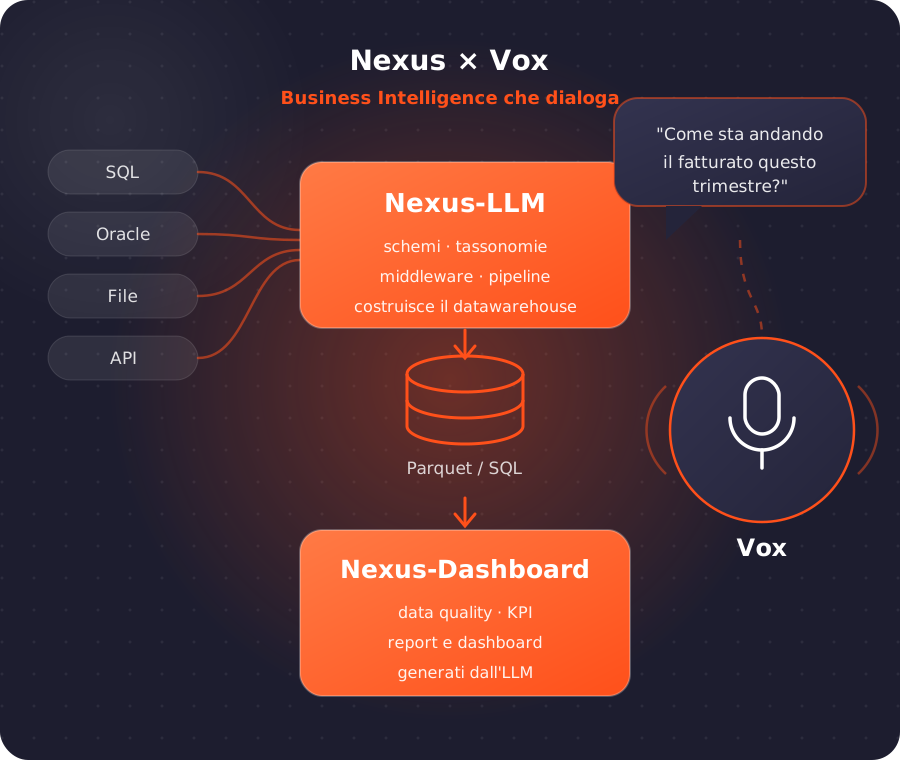
Nexus builds the company data warehouse on its own and makes it readable; Vox makes it conversational. Ask out loud how the business is doing and get a figure, a chart or a report, together with the source it came from.
The principle: the question comes before the report
Traditional business intelligence asks a company to know in advance what it will want to ask: every dashboard is a question frozen into a project. Nexus reverses the order. The engine learns the structure of the business systems, builds the data warehouse and the dictionary that explains it; from then on a question can arrive at any moment, spoken if you like, and the data to answer it is already there.
No dashboard to design
Metrics and charts are proposed by the engine from the question itself, not by a project scoped months earlier.
No hand-written ETL
The middleware and pipelines that populate the warehouse are generated by Nexus-LLM, and stay readable and versionable.
Data stays in the company
On-premise deployment, encrypted credentials and read-only queries: no source ever leaves the company perimeter.
How the system is built
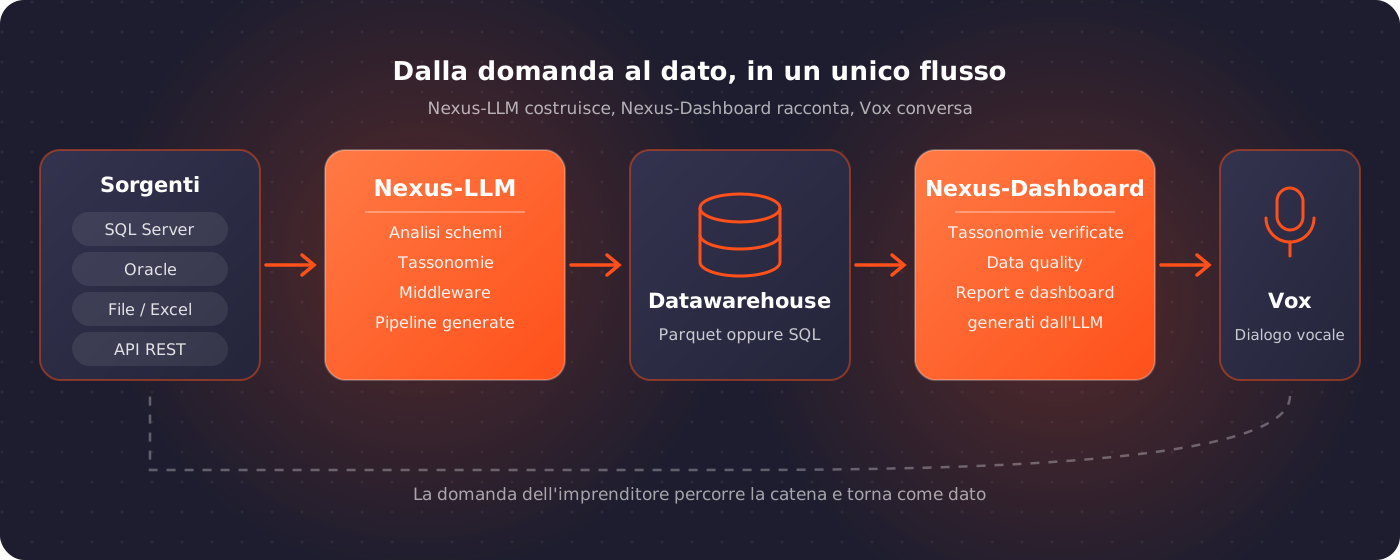
Two modules and a voice: Nexus-LLM prepares the data, Nexus-Dashboard tells its story, Vox turns it into a conversation.
Nexus-LLM
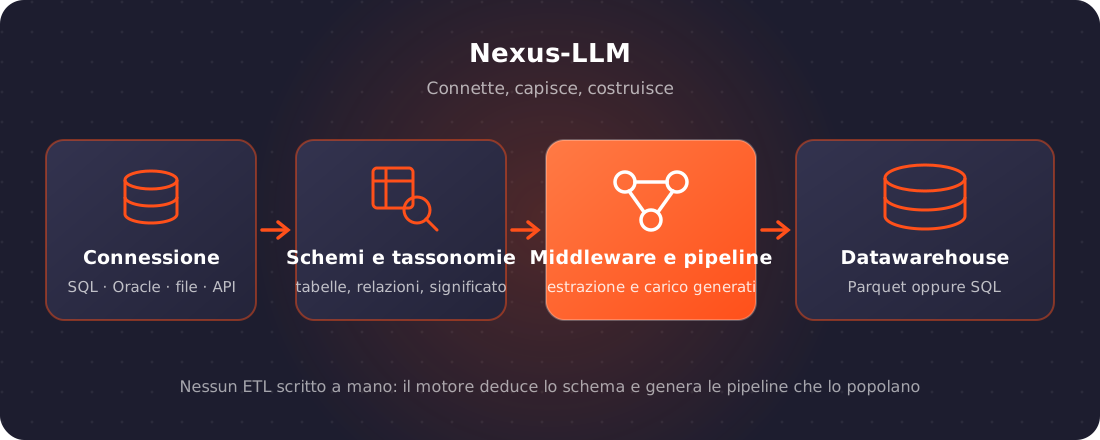
This is the half of the system that looks at data as it actually is. It connects to the company sources, analyses their schemas and taxonomies and, instead of asking a data engineer to write the loading procedures, generates the middleware and the pipelines that build the data warehouse itself.
Connected to what is already there
SQL Server, Oracle, PostgreSQL, DB2/AS400, MySQL, files and Excel, REST APIs of the ERP and of third-party services.
Analyses schemas and taxonomies
Tables, columns, keys and relationships are read and interpreted: the engine works out what internal names mean and builds the company taxonomy.
Generates middleware and pipelines
Extraction, transformation and loading procedures are produced by the engine, scheduled and repeatable, rather than hand-written project by project.
Builds the data warehouse
The warehouse is materialised in Parquet, for columnar analysis, or in SQL, when it has to stay on the tooling already in use.
Nexus-Dashboard
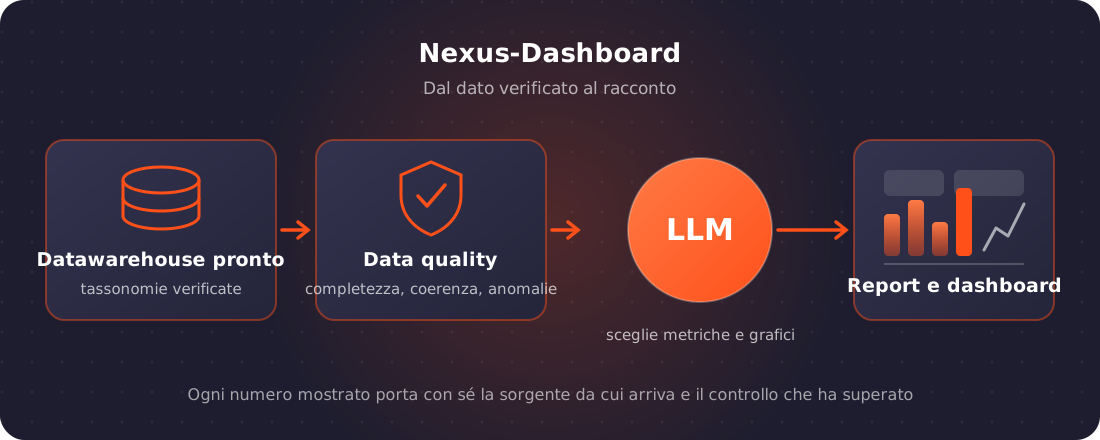
This is the half that talks to people. It starts from a warehouse that is already there, with verified taxonomies, adds the data-quality checks and lets the LLM decide how to show it: the right metric, the right chart, the right report for the question that was asked.
Verified taxonomies
The dictionary produced by Nexus-LLM is validated with the people who know the data: from then on "customer", "job" and "overdue" mean one thing only.
Data quality
Completeness, consistency across sources, out-of-range values and anomalies are checked before a figure reaches a report.
LLM-generated dashboards
Metrics, charts and layout follow from the question: a dashboard is a result, not a project to configure.
Shareable reports
Every view becomes an exportable or scheduled report, with the source and the quality check it passed next to each figure.
Vox: the part that listens
Vox is Eulogika's voice assistant. Connected to Nexus, it turns querying into a conversation: a spoken question, a short answer, more detail on request.
How is revenue doing this quarter compared with last year?
We are at 4.2 million, 9% above the same quarter last year. Almost all of the growth comes from two customers. Do you want the detail?
Yes, and send me their overdue balances too.
Report sent: revenue by customer, overdue balances and the twelve-month trend. One of the two has doubled its overdue since June.
Behind those two answers Nexus read revenue from the ERP, overdue balances from accounting and customer records from the CRM, joining them into a single view of the warehouse.
How it is adopted
Four steps, with something visible to show at the end of the first one.
Survey of the sources
We look together at which systems hold the data that matters: ERP, accounting, MES, CRM, spreadsheets, external services.
Discovery and dictionary
Nexus-LLM reads the schemas and proposes the company taxonomy; we validate it with the people who use that data daily.
Warehouse and pipelines
The engine generates middleware and pipelines, materialises the warehouse in Parquet or SQL and sets up the refresh schedule.
Dashboards and voice
We switch on Nexus-Dashboard with its data-quality checks and connect Vox for spoken questions.
The rest of the stack
Nexus and Vox plug into the Eulogika solutions already running on the shop floor and in the office.
Nexus product page
Capabilities, security, timings and how the LLM engine is adopted.
Open the pageAiDream Suite
The modular AI suite: documents, industrial automation, agents and company chat.
Open the pageQlik Business Intelligence
Data models and management dashboards, for companies with a classic BI to build on.
Open the pageFrequently asked questions about Nexus and Vox
What is the difference between Nexus-LLM and Nexus-Dashboard?
Nexus-LLM is the module that connects to SQL, Oracle, files and APIs, analyses schemas and taxonomies and generates, through middleware and pipelines, the data warehouse in Parquet or SQL. Nexus-Dashboard starts from that ready warehouse with verified taxonomies, adds data-quality checks and produces LLM-generated reports and dashboards.
In which format is the data warehouse built?
The Nexus warehouse can be materialised as Parquet files, suited to columnar analysis and large volumes, or on a SQL database, when the company wants to stay on the tooling and backups it already has. The choice is made during the project and the two can coexist for different areas.
Do we need a data engineer to write the pipelines?
No. The pipelines and middleware that populate the warehouse are generated by Nexus-LLM from the schemas it has analysed. They remain readable and editable by Eulogika engineers or by internal IT, but they do not have to be hand-written project by project.
What is Vox and how does it connect to Nexus?
Vox is Eulogika's voice assistant. Connected to Nexus, it lets you ask a question out loud, receive a short answer with the essential figures and request the detail, which Nexus sends as a report or publishes on a dashboard. The conversation is persistent: each question takes the previous ones into account.
Does company data leave the company?
No. Nexus is installed on-premise, on controlled and isolated databases. Connection credentials are encrypted, AI-generated queries are read-only and every execution is logged, in line with Eulogika's ISO 27001:2022 certified processes.
Want to see Nexus on your own data?
We start from one real source in your company and show the reconstructed schema, the proposed dictionary and the first spoken answer.
Request a demo